Solar Vegetation Management & Agrivoltaics Services – Texas & Nationwide
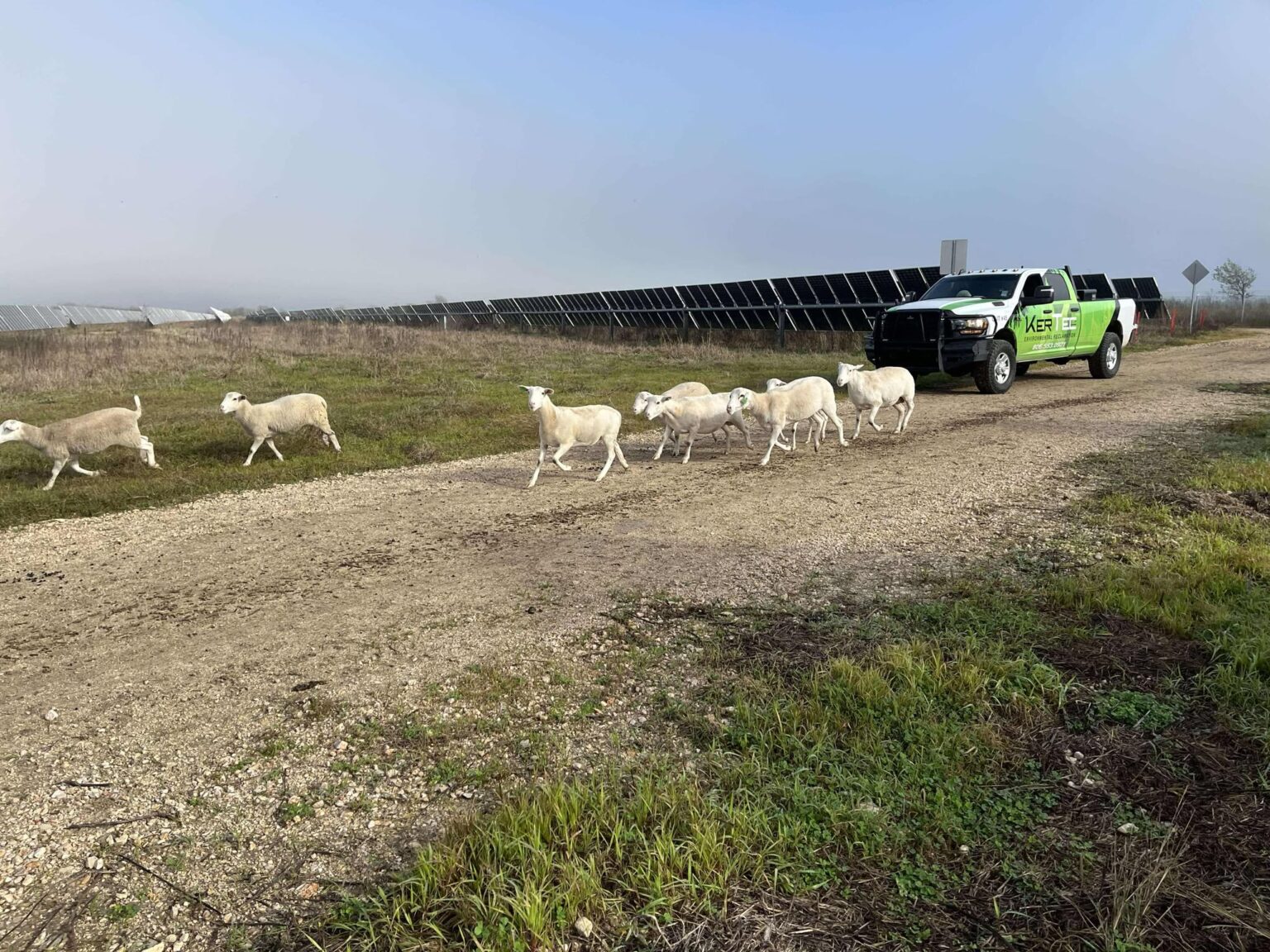
Sheep grazing has become one of the most efficient, sustainable, and cost effective ways to manage vegetation on solar farms. Instead of relying only on mechanical mowing or herbicides, agrivoltaic grazing uses trained flocks of sheep to keep grass and weeds at the ideal height under and around solar panels. This creates a healthier site, reduces maintenance costs, and improves overall energy production. We provide professional agrivoltaics programs for utility scale solar farms, commercial installations, and agricultural properties throughout Texas and across the United States.
Program Overview
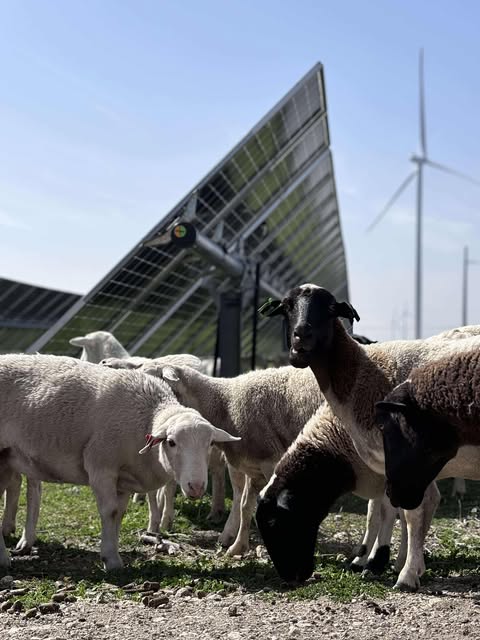
Complete Sheep Grazing Programs
We partner with professional graziers and agricultural specialists to manage every part of your agrivoltaics setup. Our programs are tailored to the size, terrain, and needs of your solar farm.
Program Features
Fencing and access management
Regular grazing rotations that maintain ideal vegetation height
Monitoring of flock behavior and site conditions
Coordination with site operators and construction teams
Seasonal adjustments based on weather and growth patterns
Full reporting and communication during each grazing cycle
Programs can be set up as seasonal contracts, multi year agreements, or long term land management partnerships.
Why Sheep
How Sheep Improve Solar Farm Performance
Sheep grazing brings unique advantages to solar facilities that go beyond simple vegetation control. Their natural behavior, size, and movement patterns create a stable, predictable environment around panels and infrastructure.
01
Gentle on Solar Infrastructure
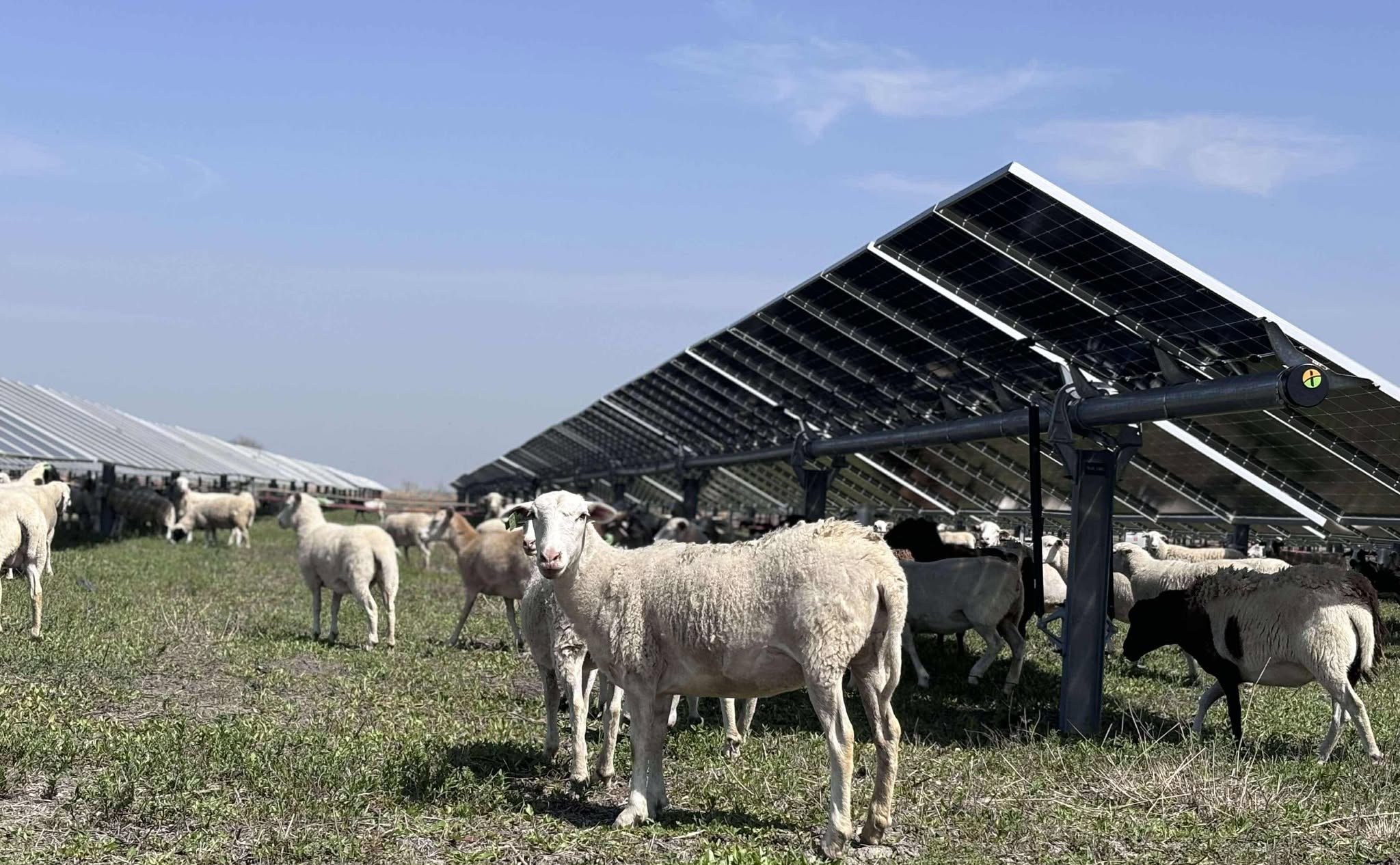
Sheep are the only livestock species that can move comfortably around solar equipment without causing damage. They do not climb or rub against racking systems, and they navigate rows with ease while keeping vegetation low and uniform.
02
Consistent and Even Vegetation Height
Instead of producing sudden drops in vegetation after a mowing event, sheep maintain growth at a steady, natural pace. This prevents shading, improves energy production, and reduces the need for intensive cleanup or repeated trimming.
03
Ideal for Hard to Reach Areas
Sheep naturally graze narrow corridors between arrays, shaded areas, perimeter zones, and spots unsuitable for machinery during wet or soft soil conditions giving reliable, year-round coverage.
04
Supports Soil and Site Health
As sheep graze, they contribute to soil health by distributing nutrients and lightly aerating the ground. This helps strengthen root systems, reduces erosion, and improves long term land stability, which is especially valuable for large scale solar facilities.
05
Reduces Long Term Costs
Grazing programs can significantly reduce annual vegetation costs. Lower fuel use, fewer maintenance hours, and less wear on equipment all contribute to a more predictable and cost effective maintenance strategy.
Proven at Scale
Case Studies
Case Study
Hybrid Vegetation Management for a Texas Utility-Scale Solar Portfolio
KerTec implemented a hybrid vegetation management program across a multi-site, utility-scale solar portfolio in Texas. The program combined managed grazing, array-safe custom mowing systems, and precision chemical applications including drone spraying to maintain vegetation within strict operational thresholds while improving ecological conditions and reducing long-term O&M variability.
2 GW
Solar capacity serviced
5M+
Solar panels traversed
<20
Panels damaged
(<0.0004%)
Self-performed, no subcontractors
Operating Context
Texas solar facilities face rapid growth surges followed by drought cycles, creating narrow compliance windows and elevated vegetation risk around high–value infrastructure.
Objectives
- Maintain vegetation at or below 18 inches in arrays
- Keep pads, combiner boxes, roads, and infrastructure clear
- Reduce erosion and stabilize soils post–construction
- Provide defensible, geo–referenced documentation for audits and O&M teams
KerTec’s Hybrid Solution
Managed Grazing
Adaptive stocking strategies aligned with forage availability and seasonal surges. KerTec–owned and managed herds, transport, shepherding, and animal care, supported by surge and drought contingencies.
Custom Array–Safe Mowing
Purpose–built mowing systems designed for solar array geometry with low ground clearance, guard packages, and optimized cutting geometry to reduce hand trimming and zero turn use.
Targeted Chemistries + Precision Drone Spraying
Selective formulations suppress non–desirable species. Drone spraying provides precision in constrained array corridors while reducing chemical footprint.
Soil & Vegetation Science
Baseline soil sampling, compaction checks, seed mix engineering, and GIS/UAV monitoring guided stabilization and long–term vegetation strategies.
Results
- Vegetation thresholds maintained across arrays and infrastructure zones.
- Mowing frequency reduced by 20–40 percent.
- Hand trimming and zero turn hours reduced from 3,000 to 1,000 hours (66.7 percent reduction).
- Non desirable species controlled to > 90 percent.
- Fewer than 20 panel incidents across 5 million panels serviced (< 0.0004 percent).
- All compliance audits passed with zero corrective actions.
Lessons Learned
Hybrid vegetation models combining grazing, custom equipment, and targeted chemistry significantly improve consistency and reduce operational strain. Drone based applications increase precision while reducing total chemical load. GIS and disciplined documentation processes create seamless audits and defensible decision trails.
Case Study
Midwest Agrivoltaics Program - Grazing Expansion
KerTec completed comprehensive planning for a Midwest agrivoltaics program that will integrate managed grazing, array safe custom mowing equipment, and targeted chemistries with drone spraying in arrays. The grazing plan was developed to meet vegetation height thresholds and satisfy siting board expectations, including those of the Ohio Power Siting Board (OPSB).
While the grazing plan was under development, KerTec successfully executed a mechanical and chemical vegetation management campaign that complied with all the same agency permit requirements and regulatory conditions.
2 GW
Solar capacity serviced
5M+
Solar panels traversed
<20
Panels damaged
(<0.0004%)
Self-performed, no subcontractors
Volume of Work
KerTec has serviced over 2 GW of solar capacity across the United States (> 5 million panels traversed) with fewer than 20 panels damaged (< 0.0004 percent) across its total portfolio to date.
All mowing and chemical vegetation management operations including transportation, equipment deployment, and chemical application were performed entirely in house by KerTec, with no subcontracting.
Regulatory Context and Agency Engagement
OPSB requirements included vegetation height control in arrays, documented clearance around equipment, stabilization and erosion control aligned with permit and stormwater commitments, and audit ready monthly reporting with geo referenced observations, corrective actions, and performance triggers. KerTec engaged actively with land teams and aligned vegetation plans with siting board conditions. Reporting practices included UAV imagery, fixed point height sampling, and chemistry logs suitable for regulatory review.
Methodology
Mechanical Vegetation Management
KerTec deployed custom mowing equipment designed for solar arrays, featuring low profile decks, compact wheelbases, and optimized cutting geometry to maintain vegetation height thresholds without damaging infrastructure.
Targeted Chemistries and Drone Spraying
Species selective formulations were applied using precision drone spraying in arrays to control non desirable species in constrained array corridors.
Compliance Alignment
All activities were documented in QA/QC logs and monthly reporting packs to meet OPSB and permit requirements.
Future Grazing Implementation
Infrastructure planning, stocking rate modeling, and fencing layouts have been finalized to support future grazing expansion.
Results
- Vegetation height thresholds were maintained across arrays and infrastructure corridors during surge periods.
- Mowing frequency reduced by 20–40 percent.
- Overall man hours reduced by 66.7 percent, lowering hand trimming and zero turn effort from 3,000 to 1,000 hours.
- Non desirable species controlled to > 90 percent.
- Serviced > 5 million panels across 2 GW of solar sites nationwide with fewer than 20 panels damaged (< 0.0004 percent).
- OPSB compliance audits completed with no corrective action requests.
Lessons Learned
Early engagement with compliance agencies ensured smooth approvals and zero corrective actions. Mechanical and chemical vegetation management provided a strong compliance foundation while grazing infrastructure was being developed. Drone spraying in arrays improved precision and reduced chemical footprint in constrained corridors.
Climate Adaptable
Agrivoltaics for Solar Farms Nationwide
Sheep grazing is a scalable, climate adaptable solution that supports solar farms across a wide range of landscapes and regional conditions. Whether a solar site is located in warm southern climates, cooler northern regions, or areas with significant seasonal swings, sheep provide reliable and consistent vegetation control that improves long term performance.
01
Effective in warm season growth zones
Sheep naturally manage rapid vegetation surges during peak sunlight months, helping prevent shading losses and fire risk in high growth seasons.
02
Reliable in cooler climates
In northern or higher elevation regions, sheep maintain uniform vegetation height even when growth patterns shift dramatically between spring, summer, and fall.
03
Improves soil stability in drought or flood prone regions
Grazing supports stronger root systems, reduces erosion, and helps stabilize disturbed soils, which benefits sites facing unpredictable weather patterns.
04
Less equipment strain during extreme conditions
Because sheep take on much of the vegetation load, operators reduce fuel use, machinery hours, and wear on equipment during hot, cold, or wet seasons.
05
Compatible with rural, agricultural, and multi use land
Agrivoltaics helps landowners maintain agricultural classifications in many jurisdictions, supports local farmers, and maximizes both energy and land productivity.
Sheep grazing integrates seamlessly with utility scale, commercial, and agricultural solar developments across the United States and adapts to regional needs without sacrificing performance.
How Agrivoltaics Supports Landowners
For private landowners hosting a solar array, sheep grazing provides additional benefits:
Retains agricultural land use designations in many jurisdictions
Generates secondary income streams
Supports local farms and graziers
Improves long term land health
Agrivoltaics helps landowners keep land productive rather than letting it sit unused beneath solar panels.
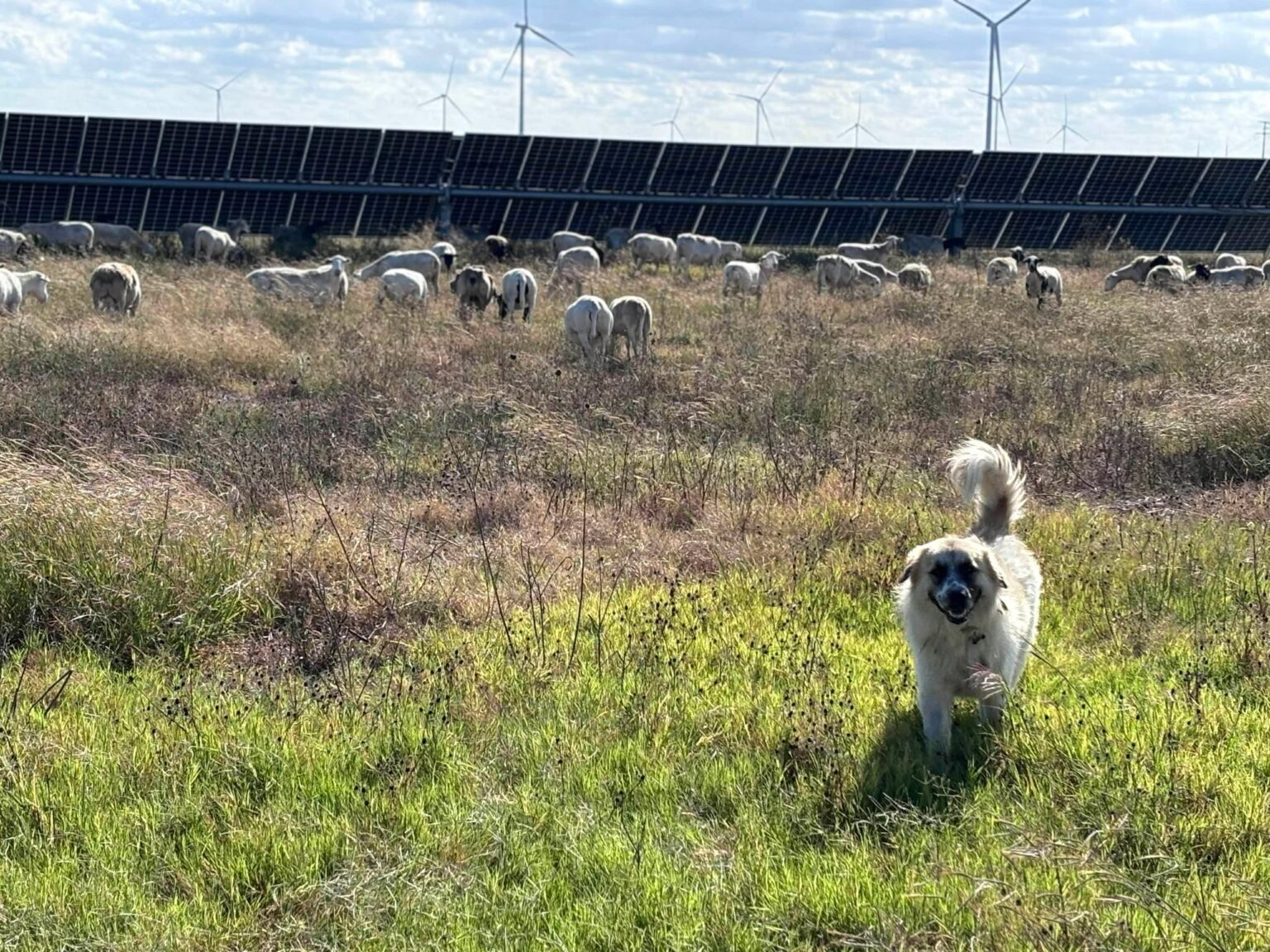
We work only with trained graziers who understand the unique environment of solar farms. Safety for both animals and equipment is the top priority.
Safe, Reliable, and Scalable
Proper flock size for each site
Safe fencing and entry points
Water access and shade
Water access and shade
Transparent scheduling and reporting
Whether you manage a 20 acre site or a multi hundred acre solar development, we scale operations to match your needs.
Start Your Agrivoltaics Program
Sheep grazing is one of the most practical and environmentally friendly solutions for long term solar vegetation management. If you want to reduce maintenance costs, improve energy performance, and support sustainable land use, agrivoltaics is a proven option.
Contact us to schedule a site assessment or request a grazing proposal. We provide sheep agrivoltaics services throughout Texas and nationwide.
About KerTec LLC
KerTec LLC provides specialized vegetation management solutions for solar farms, utilities, and large commercial properties, with a strong focus on agrivoltaics and sustainable land management. By combining proven grazing practices with modern land care strategies, KerTec helps reduce fire risk, control invasive species, and maintain compliant, well-managed sites without relying solely on mechanical mowing or chemical treatments.
With deep experience in solar vegetation management, KerTec works closely with site owners and operators to create customized, cost-effective programs that support long-term performance and environmental stewardship. Their approach improves soil health, promotes native plant growth, and keeps properties safe, accessible, and visually maintained, making KerTec a trusted partner for large-scale vegetation management projects.
Environmental Reclamation & Land Restoration Services
SCIENCE-BASED
SOLUTIONS
01
Consulting
Industry experience, design-build, or fully customized science-based environmental solutions for projects anywhere in the country.
Design-build
Compliance strategy
02
SWPPP Compliance
Qualified natural resource professionals to install, inspect, monitor, repair and report throughout the life of the project.
Inspections
Reporting
03
Erosion Control
Permanent stabilization of topsoil, with measures tailored specifically to slope, soil and rainfall at the site.
Blankets & wattles
Slope stabilization
04
Hydroseeding
Erosion control and revegetation accomplished simultaneously, with the application customized to the site and the budget.
Mulch tackifier
Single-pass
05
Revegetation
Native seed expertise applied to the project site, climate and region to meet or exceed the client’s establishment goals.
Native mixes
PLS specification
06
Vegetation Management
Customized plans, mowing and spraying programs, robotic mowing and grazing — built for solar farms and linear corridors.
Robotic mowing
Grazing